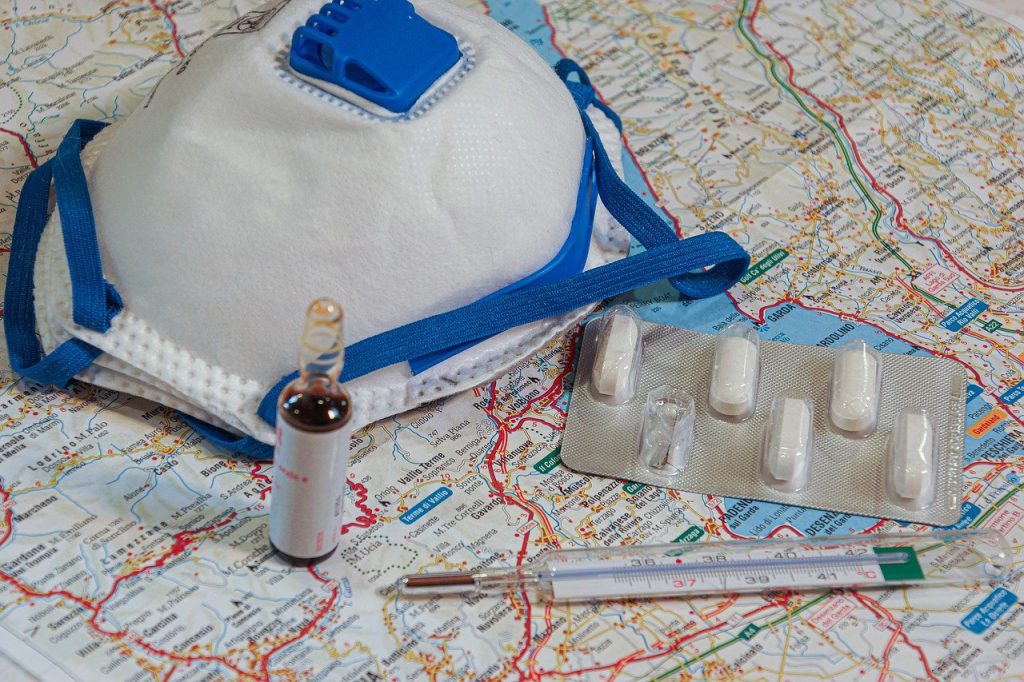
“Corona: Provincial partnerships with China improve access to protective masks”
Courtesy IFW Kiel
During the peak phase of the corona pandemic, Chinese exports of critical medical goods such as protective masks went primarily to economic and political partners. Chinese companies were able to push through drastic price increases against industrialized countries like Germany. “In order to secure their supply of critical medical goods, countries are well advised to diversify their sources of supply or develop close relations with China’s provinces, for example through local investments or city and province partnerships,” said Andreas Fuchs, head of the Kiel Institute China Initiative
Cultivating relationships with China pays off. For example, town and province twinning, close business relations, or supporting the country in their own fight against the Corona pandemic at the beginning of the year. Countries with one or more of these connections have had clear advantages in supplying protective masks and other scarce critical medical supplies during the global corona outbreak in spring. This applies to both commercial exports and Chinese aid supplies. A city or province partnership with China paid off in a doubling of aid deliveries.
This emerges from a recent Kiel Policy Brief (Fuchs, Kaplan, Kis-Katos, Schmidt, Turbanisch, and Wang: “China’s mask diplomacy: The role of political and economic relations for the sourcing of medical goods during the corona crisis”) in which the authors compare the quantities and prices of critical medical goods in March and April this year and last year.
“The data show the extraordinarily important role of personal relations in the Chinese culture, the so-called guanxi, whether on economic or on political level,” said Fuchs.
According to the study, the 15 largest importers of critical medical goods include not only heavily affected and populous countries such as the USA, Italy, and Spain, but also numerous countries with relatively low infection and death rates, such as Japan, Korea, Singapore, Malaysia, and Germany. At the same time, Chinese companies took advantage of the high demand and willingness to pay in the industrialized countries to push through price increases, some of them drastic.
European countries had to accept the highest price increases for face masks. In contrast, imported volumes rose relatively most strongly in Russia and neighboring Asian countries. The prices for protective masks from China for Germany, France, and Spain increased by around twelve times, for Italy by almost 16 times. The imported quantities more than doubled; in Italy, they tripled.
In contrast, the volume of imported masks increased sixfold in Russia, fivefold in Singapore, three and a half times in Malaysia, and around two and a half times in Japan. All four countries were barely affected by the corona pandemic in March and April and had to accept less drastic price increases than Germany or Italy, around five times higher and Russia eight times higher.
China is by far the most important supplier of medical goods worldwide. According to the United Nations Trade Database, in 2018, China accounted for 44% of global face mask exports, while the next largest exporters, Germany (7%) and the United States (6%), played a comparatively minor role.
This emerges from a recent Kiel Policy Brief (Fuchs, Kaplan, Kis-Katos, Schmidt, Turbanisch, and Wang: “China’s mask diplomacy: The role of political and economic relations for the sourcing of medical goods during the corona crisis”) in which the authors compare the quantities and prices of critical medical goods in March and April this year and last year.
“The data show the extraordinarily important role of personal relations in the Chinese culture, the so-called guanxi, whether on economic or on political level,” said Fuchs.
According to the study, the 15 largest importers of critical medical goods include not only heavily affected and populous countries such as the USA, Italy, and Spain, but also numerous countries with relatively low infection and death rates, such as Japan, Korea, Singapore, Malaysia, and Germany. At the same time, Chinese companies took advantage of the high demand and willingness to pay in the industrialized countries to push through price increases, some of them drastic.
European countries had to accept the highest price increases for face masks. In contrast, imported volumes rose relatively most strongly in Russia and neighboring Asian countries. The prices for protective masks from China for Germany, France, and Spain increased by around twelve times, for Italy by almost 16 times. The imported quantities more than doubled; in Italy, they tripled.
In contrast, the volume of imported masks increased sixfold in Russia, fivefold in Singapore, three and a half times in Malaysia, and around two and a half times in Japan. All four countries were barely affected by the corona pandemic in March and April and had to accept less drastic price increases than Germany or Italy, around five times higher and Russia eight times higher.
China is by far the most important supplier of medical goods worldwide. According to the United Nations Trade Database, in 2018, China accounted for 44% of global face mask exports, while the next largest exporters, Germany (7%) and the United States (6%), played a comparatively minor role.
Download the full report here.
